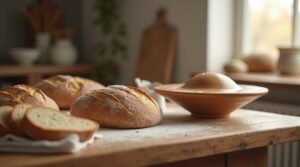
How to Make the Best Authentic French Baguettes at Home
My baking journey started out humbly—with a no-knead loaf that barely rose, but it sparked something in me. Years later, I’ve come to master the art of the French Baguette, and I promise, it’s not as intimidating as it seems. Even if you’re a complete beginner, this quick, easy recipe will walk you through everything you need to know.
It’s about more than just bread—it’s about creating something beautiful, something authentic that carries the warmth of a Sunday morning in France, with the aroma of freshly baked foods filling the kitchen.
How to Make French Baguettes at Home-The Answer
The secret to a French baguette lies in just four ingredients—flour, water, yeast, and salt—yet skilled bakers turn them into crusty, flavorful loaves. While traditional baguettes in France used only natural leaven, many now use baker’s yeast or a mix to lighten the crumb and meet demand. Despite changes, the heart of bread-making remains: simplicity, care, and respect for the craft.

Making the best baguettes means paying attention to the details—like the choice of flour, the timing of your fermentation, and the importance of using a poolish or pre-fermentation to develop flavour and structure. You simply mix yeast, flour, and water, then let it ferment overnight. The dough becomes soft, elastic, and full of life. During the proofs, you’ll see the dough develop that telltale open ear and crackly, dark golden crust. When you slice into it, the crumb should be open and airy, with a slightly chewy, buttery texture. Every stage matters—from shaping to baking on a proper baking sheet, with care in handling time.
The Great British Crumpet : Click to Read
What’s amazing is how this single recipe becomes the ultimate accompaniment. Pair it with a French cheese board, charcuterie, or even classics like Onion Soup Gratinée, Lemon Thyme Roast Chicken (Poulet Rôti), Salade Niçoise, or a rustic Olive Tapenade. These traditional recipes feel like a journey straight to France, bringing depth to any meal. My personal favorite? A simple breakfast baguette, sliced and slathered with butter, or filled with dijon mustard, proper ham, and mature cheddar cheese—comforting, satisfying, and full of character.
For those who want to dive deeper, I highly recommend checking out the video tutorial linked with the visual help. It covers the full stages of baking and breaks down how gluten develops during hydration. With a bit of planning, attention to proofs, and a willingness to enjoy the adventure, you’ll discover that baking the perfect baguette is totally achievable—and endlessly rewarding.
What French Baguettes are Made Of?
Making a traditional French baguette at home requires just four humble ingredients: flour, water, yeast, and salt. Despite the simplicity of these basics, it’s the craft and care that turn them into beautiful, flavorful, and perfectly crusty loaves. I’ve spent countless hours in my kitchen, shaping homemade baguettes on a cool marble table and watching them turn golden in the oven.
As the crackling sound of the crust fills the air, there’s a sense of pure joy that only comes with this process. Back in France, baguettes were traditionally made with natural leaven, but over time, many bakers started using a baker’s mix to create a slightly lighter crumb and improve efficiency. This shift didn’t take away from the soul of the baguette, which remains rooted in simplicity, but the changes helped bakeries meet the growing demand for fresh loaves. In the end, making the perfect baguette is about respecting the art of bread-making, with a bit of patience and respect for the process.
Other Factors that Define a Baguette’s Appearance and Taste
When making French baguettes at home, the basic ingredients are just the beginning. What truly defines their appearance and taste is the process behind them. I’ve learned that how the dough is allowed to rise, whether quickly with warm water at ambient temperature or slowly through cold retarding, makes a huge difference.
A slower fermentation not only improves the flavor, but it also gives it more complex depth. You can’t rush the process, as the way you ferment, retard, proof, shape, and score directly affects how the final product will bake and what it looks and tastes like. Small choices in handling and timing can really bring out the best in every loaf, resulting in a baguette that’s truly authentic.
Baguette Making Process
One of the most fascinating baguette methods I’ve tried is based on a recipe inspired by Anis Bouabsa, the winner of the 2008 Best in Paris contest. In an interview, he shared that he used baker’s yeast in a very little quantity and focused on a high hydration ratio of 75% water to flour, which results in a wet dough.
What really stood out was how the dough was barely kneaded—just folded three times over the course of an hour, then placed in the fridge for 21 hours. According to him, the dough isn’t fully risen when it enters the oven; instead, the extremely hot heat (about 480F) helps create the final volume and iconic shape. This method truly changed my approach to baking at home, allowing me to make perfectly shaped and fluffy baguettes with minimal effort.
How Do I Score Baguettes?
Scoring a baked baguette is more than just making cuts; it’s about allowing the dough to open in a controlled manner, helping to create that signature ear during baking. From my own experience, I’ve found that holding a bread lame or a razor blade at a 45-degree angle and slicing 5mm deep works best. Begin your cut on the right, finish on the left, and then repeat, placing each new score slightly above the last. You should aim to see about four scored marks if you’re working with a standard-sized baguette. Make sure the lines are almost vertical, running down the center of the dough, about 1cm apart, staying within the imaginary borders.
Whether you use a sharp knife or your favorite tool (I personally love the UFO baker’s for its precision), keep a steady hand and pay close attention to detail. These small choices make all the difference in the final bake, so place the scores lengthways, focusing on the top, and don’t let the dough tear before you finish.
How to Bake French Baguettes at Home?
To bake truly great baguettes at home, I always start by pre-heating my oven with a baking steel or stone inside. Both help to retain intense heat, which is key for achieving a strong spring in the dough. Once the dough is transferred to the oven, the high heat begins creating that beautiful open texture and the signature ear. Personally, I prefer using the stone because it retains heat better, giving off more even heat, which often results in a better loaf. However, this method works best for larger loaves, though there’s a risk that the bottom may over-cook due to the high heat transfer speed.
To prevent the crust from forming too early, I create steam using a hot tray or pan. I add about 40ml of water along with a couple of ice cubes, which helps expand the dough during the initial phase and improves the crumb. Sometimes, I also use a coiled, non-treated stainless chain vessel to help generate steam. Everything needs care and attention, as there’s even a danger of overcooking, but when done right, the results are absolutely worth it. This method ensures a perfect, crispy baguette every time.
Ingredients
Poolish or pre-ferment
150g strong bread flour (protein content 12% or higher)
150g room temperature water
3g instant dried yeast
Main Dough
303g of poolish (pre-fermented dough) from the above recipe
220g room temp water
13g sea salt
4g instant dried yeast
380g strong bread flour (protein content 12% or higher)
Times & Temperatures
My kitchen temperature:
20c / 68f
Oven temperature: 250c / 485f
Oven setting: Bake mode (top & bottom heat with the fan turned off)
Bake time: 20 minutes
Can you Freeze Baguettes?
Yes, you, can, absolutely, freeze, your, homemade, baguettes, if, done, right, I, usually, let, them, cool, completely, to, room, temperature, before, wrapping, tightly, in, cling, film, or, placing, a, plastic, zip-lock, bag, then, into, the, freezer, They, keep, well, for, several, months, but, my, opinion, they’re, best, consumed, within, two, of, freezing, When, defrosting, prefer, warm, gently, low, oven, crust, crisp, Sometimes, also, part, bake, during, first, remove, as, just, begin, get, some, colour, leave, wrap, Later, defrost, at, 220c, 430f, until, golden, brown, perfect, again
What we Cover in the Baking Baguttes for Beginners Workshop
If, you’re, a, beginner, wanting, to, make, beautiful, French, baguettes, learning, how, proof, your, dough, is, the, real, turning, point—it, sets, tone, for, everything, from, texture, shape, When, I, first, started, found, that, using, dry, active, yeast, was, surprisingly, easy, and, honestly, it, felt, super, rewarding, see, rise, just, right, moment, transformed, my, baking, right, ways, of, rolling, scoring—small, changes, but, they, helped, shapes, come, out, looking, like, something, professional, Chef, had, try, different, techniques, follow, expert, tips, get, look, crunch, Even, though, use, simple, electric, oven, once, understood, cooking, times, temperature, control, everything, clicked, Along, the, way, I’ve, made, plenty, mistakes, knowing, start, correcting, them, where, real, happens, Now, even, bake, extra, keep, later, because, storing, leftovers, properly, means, can, eat, next, day, without, losing, quality—plus, trying, new, recipes, each, setting, keeps, things, fun
What is the Secret to Making French Baguettes?
Baking a crusty French baguette at home starts with long fermentation to develop the dough and produce a nice, golden crust. I’ve learned that adding steam by tossing ice or water onto a preheated tray or pan in the oven helps bring out that crispy finish. This simple step makes a huge difference in texture, bite, and overall flavor, and it’s one of the biggest secrets I always focus on when I bake.
What is the Secret of the Best Baguette?
The best French baguette starts with flour high in protein content for great texture. Always score the top with a sharp knife—scoring or slicing isn’t just decoration, it helps the rise. A steam bath gives the perfect crust. Use fresh yeast, and if needed, freeze and reheat later. These tips always work
What is the Best Flour for Traditional Baguettes?.
The best flour for French baguettes is Type 55, known for its lower protein content—usually around 11.5%. It’s not found in every standard supermarket, but you can buy it online from King Arthur Flour if All-Purpose doesn’t give you the results you want.
What is the Difference Detween a Baguette and a Traditional Baguette?
A traditional French baguette, or baguette tradition, is made with strict adherence to classic techniques and pure ingredients, giving it a crusty exterior, chewy interior, large irregular air pockets, and a richer flavor. A standard or ordinary one is often longer, softer, may have additives, and a uniform crumb with less complex taste.